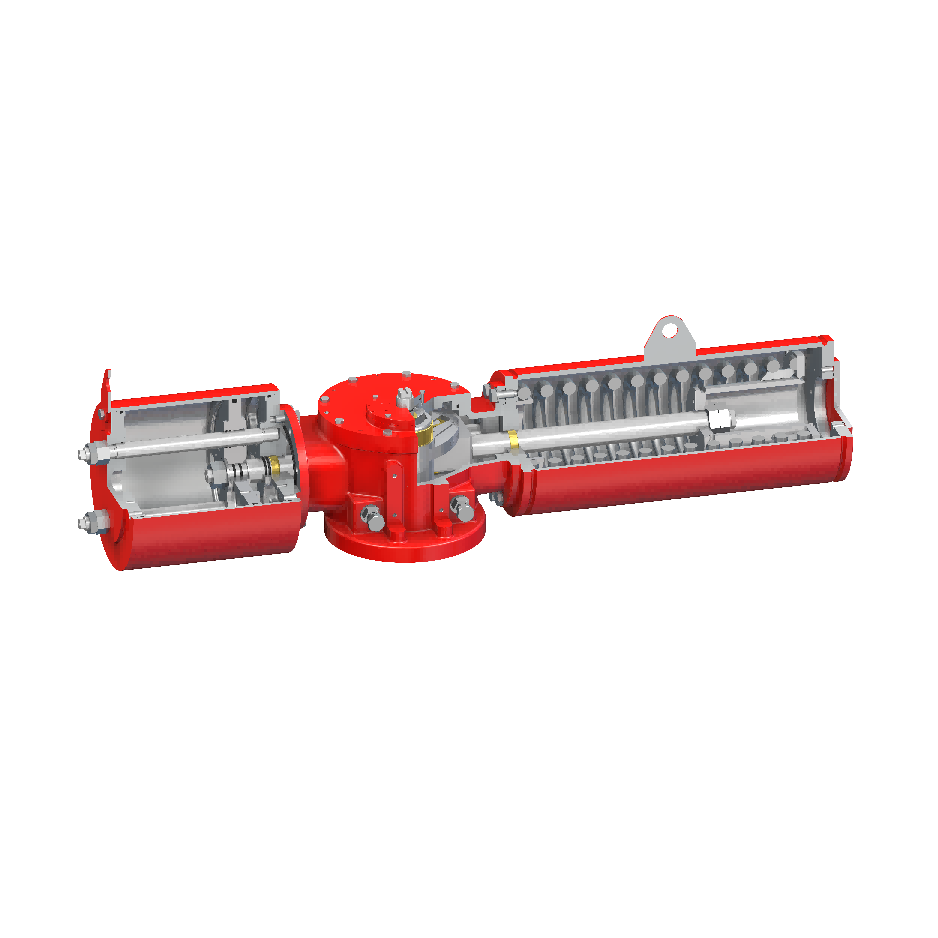
Chemical Process Pneumatic Actuator by STARD GEARS for Valve Control in Chemical Service
SUZHOU, JIANGSU, CHINA, August 28, 2026 /EINPresswire.com/ -- STARD GEARS supports Chemical Process Pneumatic Actuator
Press Release Disclaimer: This is a press release distributed through the XPR Media network. It has not been independently verified by our newsroom.


SUZHOU, JIANGSU, CHINA, August 28, 2026 /EINPresswire.com/ — STARD GEARS supports Chemical Process Pneumatic Actuator applications with the YP Series Scotch Yoke actuator for automated control of quarter-turn ball, butterfly, and plug valves. Chemical media compatibility still needs separate verification for dynamic seals, external coatings, construction materials, and hazardous-area documentation before installation in aggressive process service. For highly corrosive, toxic, or reactive environments, model-level material and accessory compatibility should be confirmed against the actual process conditions.
Chemical Process Pneumatic Actuator Selection Starts with Media and Valve Duty
Procurement for chemical service requires significantly more than matching a valve flange. The evaluation of a Chemical Service Pneumatic Actuator must begin with a thorough assessment of media corrosivity, valve type, operating torque profiles, fail-safe position requirements, hazardous-area classification, and ambient temperature conditions before determining the final YP actuator configuration. STARD GEARS valve-control products cover demanding chemical applications, with the YP series specifically engineered for 90-degree quarter-turn operation on industrial ball, butterfly, and plug valves.
The initial configuration choice depends heavily on baseline process safety. Double-acting and spring-return configurations correspond to two-way pneumatic air drive and loss-of-air mechanical return, respectively. The required safe direction must always be determined by a formal process hazard analysis rather than mechanical convenience. While aggressive chemical media typically do not enter the actuator housing directly during normal pipeline operation, ambient steam, unexpected flange leaks, and aggressive facility washdown cleaning agents will continuously challenge the exterior housing, exposed shaft components, dynamic seals, and mounted accessories. Accommodating a standard instrument working pressure of 3 to 7 barg is only the mechanical baseline; long-term reliability in a chemical plant requires treating the surrounding atmosphere as a primary environmental degradation threat.
Torque Curve and Fail Position Must Match the Chemical Valve
Chemical processing creates unpredictable and fluctuating mechanical loads. Media crystallization, sticky slurry adhesion, severe pressure differentials, and tight polymeric seal structures can significantly increase the required opening and closing torque of a chemical valve over its operational lifespan. To ensure reliable automation, the actuator must be specified with a symmetrical or canted yoke mechanism that accurately matches the valve’s most demanding operational condition.
A symmetrical yoke design is best suited for valves with a relatively balanced torque requirement throughout their 90-degree travel, such as certain plug valves or floating ball valves. In contrast, a canted yoke architecture provides significantly higher output torque at the extreme ends of the stroke, which is essential for overcoming the high break or reseat loads typical of high-performance butterfly valves. When specifying a spring-return configuration for chemical service, engineering teams must mathematically verify that the fail-safe position can be achieved under the minimum available air supply while simultaneously overcoming the maximum predicted valve torque. For double-acting setups, the facility must confirm the process handling protocol following an unexpected loss of instrument air. While the actuator provides a ±5° mechanical stroke adjustment for end-position calibration, this mechanical adjustment cannot compensate for an undersized torque output or an incorrect valve interface selection.
Materials, Seals and Protection Need Chemical-Environment Review
Long-term actuator reliability in a harsh chemical plant depends heavily on the material compatibility of the housing surface, exposed shaft components, dynamic seals, exposed fasteners, and sensitive control accessories. Procurement teams must recognize that an Ingress Protection rating alone cannot fully describe structural corrosion resistance. The standard YP product provides IP67 protection against dust and moisture ingress, but true chemical resilience requires deeper material scrutiny.
Connections and moving pressure boundaries utilize NBR or specialized elastomeric seal materials depending on the selected temperature configuration, which includes standard, low, and high-temperature options to match the process climate. The project engineering team should purposefully select specific elastomeric seals, heavy-duty external coatings, stainless-steel hardware components, or alternative housing materials based on the actual corrosive media, ambient steam presence, caustic washdown cleaning agents, and sustained operating temperatures. Furthermore, this comprehensive protection strategy must extend directly to the control infrastructure. Accessory wiring, pneumatic air tubing, and cable entries must maintain the identical IP rating and chemical resistance requirements as the main actuator body to prevent premature system failure from a single compromised field connection.
Hazardous-Area and Control Packages Require Configuration-Specific Evidence
Automation in chemical processing often intersects with explosive, volatile, or flammable atmospheres. The explosion-proof and functional safety requirements in chemical projects must cover the complete, fully assembled configuration of the Chemical Valve Actuator, its integrated accessories, and the field installation method. These critical safety approvals cannot be broadly assumed or directly extended from other catalog models or unrelated product series.
Procurement documents for chemical manufacturing plants must explicitly specify the required hazardous zone, gas group, temperature class, protection type, and exact certificate scope for the target site. Control components such as explosion-proof solenoid valves, hazardous-area limit switches, electro-pneumatic positioners, and air preparation units must precisely match the actuator’s standard NAMUR interface, the facility’s regulated air supply pressure, and the overarching distributed control system logic. During site commissioning, the defined fail direction, required emergency stroke time, and partial stroke test parameters must be integrated into the functional testing protocol and the final site acceptance documentation to validate the integrity of the safety loop.
Chemical Compatibility Requires Separate Material and Seal Review
Mechanical sizing is only the first preliminary step in chemical valve automation. The structural valve compatibility and torque capability of the Chemical Process Pneumatic Actuator cannot substitute for a rigorous, chemical-specific media compatibility review. The selected dynamic seals, specialized protective coatings, construction materials, and explosion-proof documentation need to be aggregated into the project data package as separate, verifiable engineering line items.
Chemical-service suitability at STARD GEARS cannot be defined by a broad industry label alone. The YP Series provides the modular quarter-turn mechanical platform, but corrosion class, elastomer selection, protective coatings, and any ATEX or IECEx requirements must be matched to the actual process media, operating temperature, surrounding atmosphere, and installed accessory package. Because chemical interactions depend on concentration, temperature, and mixed-media conditions, these items should remain explicit project-level engineering requirements.
Chemical-Service Approval Ends with a Media-Specific Data Sheet
Successful procurement for aggressive chemical process environments requires moving beyond general industry claims and standardized brochure specifications. The final, approved configuration of the Chemical Process Pneumatic Actuator should explicitly add detailed media characteristics, temperature extremes, corrosion allowances, seal material specifications, and hazardous-area data directly alongside the standard YP pneumatic torque output and mechanical fail-position requirements.
A broad chemical industry background only indicates a manufacturer’s general application direction and historical capability; it cannot mathematically substitute for the detailed engineering compatibility judgment of each fluid medium against the chosen elastomers, surface coatings, and control accessories. To finalize a safe, compliant, and reliable automation package for chemical service, the engineering or procurement team should submit their media-specific valve data and strict certification requirements directly for a comprehensive technical review. For more information on configuring modular quarter-turn actuation and confirming material compatibility for your chemical processing applications, visit https://www.stard-gears.com/.
Suzhou SIP Stard Automation CO.,LTD.
STARD GEARS
email us here
Visit us on social media:
LinkedIn
YouTube
Legal Disclaimer:
EIN Presswire provides this news content “as is” without warranty of any kind. We do not accept any responsibility or liability
for the accuracy, content, images, videos, licenses, completeness, legality, or reliability of the information contained in this
article. If you have any complaints or copyright issues related to this article, kindly contact the author above.

Media gallery